
Introduction
Purchasing property in a state where you don’t currently live presents unique challenges—from understanding unfamiliar markets to coordinating logistics remotely to navigating state-specific regulations. Yet out-of-state buyers represent a significant and growing portion of Northern Nevada’s real estate market, drawn by tax advantages, lifestyle benefits, and investment opportunities.
This comprehensive guide addresses the practical realities of purchasing residential or investment property in Northern Nevada from out of state, with specific focus on the questions, concerns, and logistics that out-of-state buyers face.
Why Out-of-State Buyers Choose Northern Nevada
California Exodus
The largest source of out-of-state buyers are California residents seeking lower costs, better tax treatment, and lifestyle quality without sacrificing proximity to California.
Key Drivers:
- No state income tax (vs. 13.3% top rate in California)
- Lower property costs (median Reno home ~40% less than Sacramento)
- Reduced cost of living overall
- Less traffic and congestion
- Outdoor recreation access
- 3-4 hour drive to San Francisco Bay Area
Many California buyers maintain ties to California (family, clients, recreational access) while establishing Nevada residency for tax purposes.
Remote Work Flexibility
The post-pandemic normalization of remote work has untethered many professionals from expensive coastal cities. Northern Nevada offers:
- Reliable internet infrastructure
- No state income tax on remote wages
- Reduced housing costs freeing up capital
- Mountain and outdoor lifestyle
Investment Opportunity
Out-of-state investors recognize Nevada’s favorable landlord-tenant laws, strong rental demand, and appreciation potential. Many are California-based investors seeking better returns and lower operational complexity than California offers.
Retirement Planning
Retirees are attracted by Nevada’s tax treatment of retirement income (no state tax on pensions, Social Security, or IRA distributions), lower cost of living, and four-season recreation.
Understanding Northern Nevada Markets
Out-of-state buyers often lack context about different areas within Northern Nevada. Here’s a practical framework.
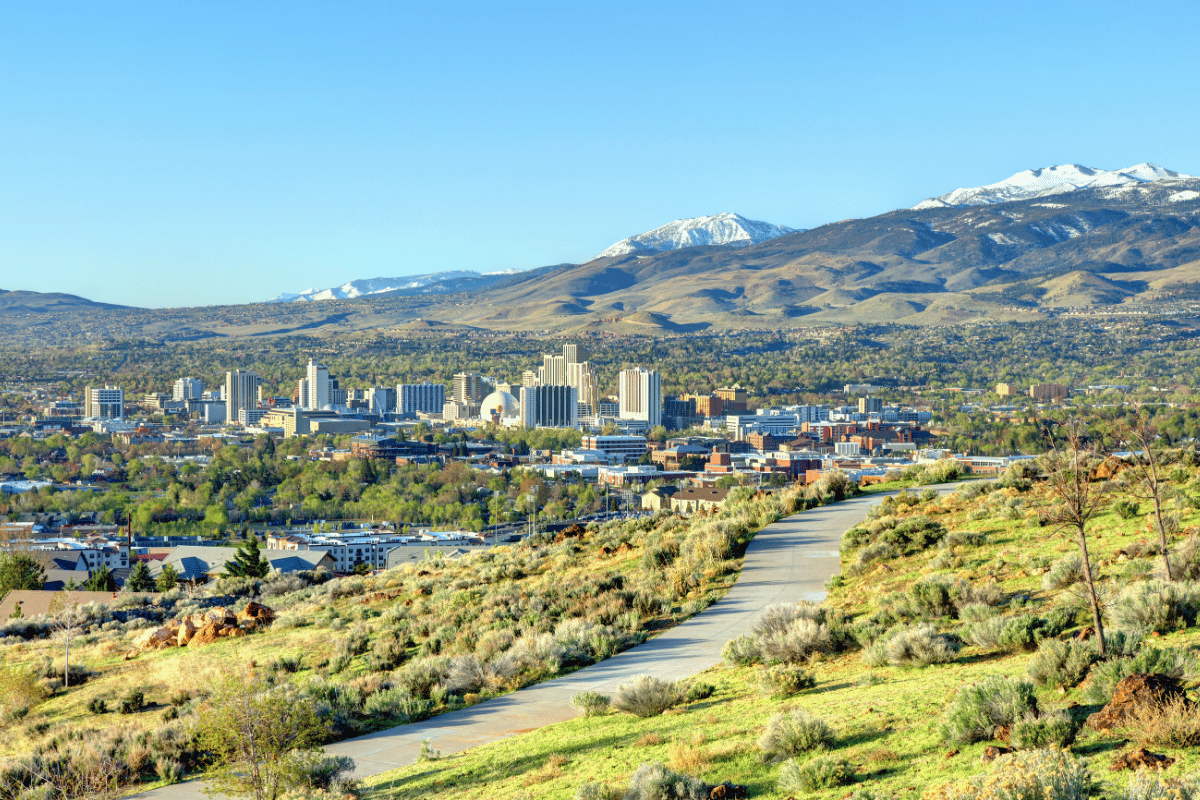
Reno-Sparks Metro (Population ~500,000)
Character: Urban center with arts, dining, entertainment, and employment. Mix of historic neighborhoods and modern developments.
Best For:
- Primary residence with walkable lifestyle (Midtown, Old Southwest)
- Master-planned communities (Somersett, Damonte Ranch)
- Investment properties (multifamily throughout)
- Families prioritizing schools and amenities
Median Home Price: ~$575,000 (varies significantly by neighborhood)
Key Neighborhoods:
- Midtown: Walkable, restaurants/galleries, historic homes, arts district
- Old Southwest: Historic charm, tree-lined streets, near downtown
- South Reno: Newer homes, family-oriented, good schools
- Northwest Reno: Suburban, newer development, mountain views
- Somersett: Master-planned, golf, amenities, views
- Sparks: More affordable, growing, Victorian Square downtown
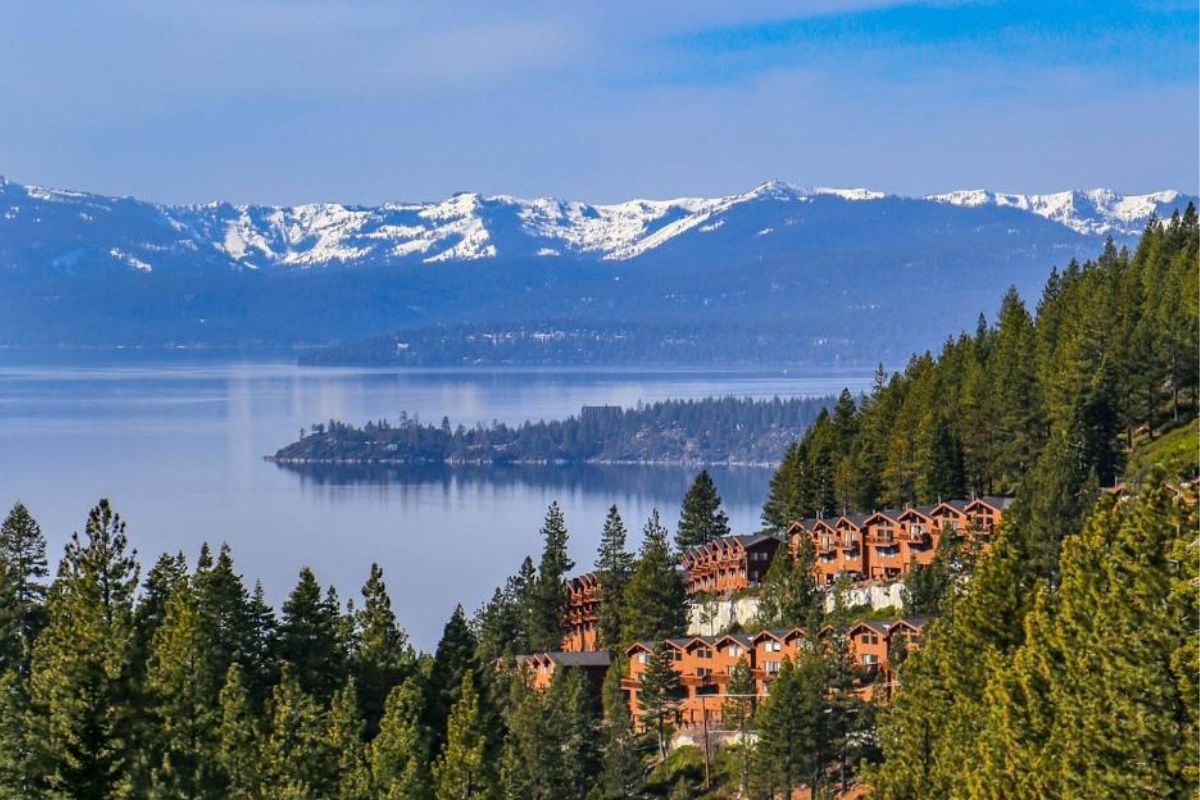
Lake Tahoe (Multiple Municipalities)
Character: Alpine resort community, tourism-driven, seasonal population, natural beauty, supply-constrained.
Best For:
- Second homes / vacation properties
- Vacation rental investments (where permitted)
- Outdoor recreation lifestyle
- Long-term appreciation plays
Median Home Price: ~$1,250,000 (varies dramatically by location and lake proximity)
Key Areas:
- Incline Village (NV side, North Shore): Premium area, private beaches, golf, views
- Crystal Bay (NV side, North Shore): More accessible than Incline, casino area
- West Shore (CA side): Quieter, more remote, scenic
- South Lake Tahoe (CA/NV): Tourist center, entertainment, varied price points
Critical Note: Lake Tahoe vacation rental regulations vary significantly by jurisdiction. Some areas restrict or prohibit short-term rentals. Research thoroughly before purchasing with vacation rental intent.
Carson City (Population ~58,000)
Character: State capital, government employment base, historic, more affordable than Reno.
Best For:
- Budget-conscious buyers
- Government employees
- Investors seeking lower entry points
- Those wanting small-town feel with access to Reno/Tahoe
Median Home Price: ~$485,000
Growth Corridors (Fernley, Dayton, Minden/Gardnerville)
Character: Smaller communities benefiting from Reno growth spillover, more rural feel, very affordable.
Best For:
- Buyers seeking acreage or space
- Budget-friendly options
- Long-term appreciation plays
- Investors targeting emerging markets
Median Home Prices: $400,000-$475,000
The Remote Purchase Process
Phase 1: Market Education (Before You Visit)
Virtual Market Research:
- Review online property listings to understand pricing and inventory
- Study neighborhood characteristics through satellite imagery and street view
- Read local news to understand market dynamics
- Connect with local real estate advisor for market briefing call
Goal: Arrive for property tours with context and focused criteria.
Phase 2: Property Identification and Tours
Compressed Timeline Tours:
Most out-of-state buyers plan concentrated visits (2-4 days) to see multiple properties efficiently.
Optimizing Your Visit:
- Pre-schedule property showings (8-12 properties for comprehensive tour)
- Include neighborhood drives during different times of day
- Visit local amenities (schools, shopping, recreation)
- Allow time for additional showings if something unexpected appeals
Virtual Tour Option:
Some buyers conduct initial screening via video walkthrough before traveling for final verification tours.
Phase 3: Offer and Negotiation
Timeline Considerations:
- You may need to return home before inspections occur
- Coordinate inspection scheduling with travel or hire inspection services that provide detailed reports remotely
- Be available via phone/email for negotiation and decision points
Representation Matters:
Local representation becomes critical when you’re not physically present to manage details.
Phase 4: Due Diligence While Remote
Inspection Coordination:
- Schedule inspections that work with any in-person availability
- Request detailed photo/video documentation
- Consider hiring specialized inspectors for critical systems if you can’t attend
- Remain available by phone during inspections for real-time questions
Document Review:
- Review title reports, disclosures, HOA documents remotely
- Schedule calls to discuss findings and implications
- Don’t hesitate to ask questions about anything unfamiliar
Phase 5: Closing
Remote Closing Options:
Nevada allows several remote closing methods:
- Mail-away closing: Sign documents in your home state with mobile notary, mail to escrow
- Electronic closing (e-closing): Digital signature on some documents where accepted
- Power of attorney: Grant closing authority to representative (requires advance preparation)
- Travel for closing: Some buyers prefer to sign in person (not required)
Funds Transfer:
Wire transfer to escrow typically required for closing funds. Verify all wire instructions via phone (not email) to prevent fraud.
Nevada-Specific Considerations
Property Disclosure Requirements
Nevada is a “seller disclosure” state. Sellers must complete a Seller’s Real Property Disclosure Form detailing property condition and known issues.
Key Sections:
- Structural condition
- System functionality (HVAC, plumbing, electrical)
- Past repairs or issues
- HOA or special assessment information
- Water rights (rural properties)
- Environmental issues
Review carefully and ask questions about anything unclear or concerning.
Homeowners Association (HOA) Review
Many Nevada communities have HOAs. Critical review items:
- Monthly/annual fees and what they cover
- Financial health of HOA (reserves, special assessments)
- Rules and restrictions (rentals, modifications, parking)
- Pending litigation or major expenditures
Nevada-Specific: Nevada law (NRS 116) provides strong HOA authority. Understand the HOA’s power before purchasing.
Water Rights (Rural Properties)
Properties outside municipal water systems may have well water or water rights. Understand:
- Water source and quality (request test results)
- Water rights documentation and transferability
- Adequacy for intended use
- Shared well arrangements (if applicable)
Property Taxes
Nevada property taxes are assessed by county. Key points:
- Effective rate ~0.53-0.65% in most Northern Nevada areas
- Assessed value capped at 3% annual increases for most residential
- Supplemental tax bills possible after purchase (reflecting sale price)
- No state income tax provides overall tax savings vs. many states
Title and Escrow
Nevada uses escrow companies (not attorney closings). The escrow company:
- Holds funds and documents
- Orders title search
- Facilitates document signing
- Disperses funds at closing
- Records deed
Typical closing timeline: 30-45 days from accepted offer.
Financing Considerations for Out-of-State Buyers
Mortgage Qualification
Lenders treat out-of-state purchases similarly to in-state, but consider:
Second Home vs. Investment Property:
- Second home: Lower down payment (10-15%), better rates, must certify intent to occupy part-time
- Investment property: Higher down payment (20-25%), higher rates, rent income may qualify you
Remote Income Verification:
Easier if you’re W-2 employee with established employer. Self-employed or variable income may require additional documentation.
Pre-Qualification Before Travel:
Get pre-qualified before making offers. Sellers view pre-qualified out-of-state buyers more favorably than those without financing confirmation.
Cash Purchases
Many out-of-state buyers purchasing investment properties pay cash to:
- Strengthen offers in competitive markets
- Simplify remote closing
- Avoid investment property financing costs
- Potentially refinance later after establishing rental history
Lender Selection
Local vs. National Lenders:
Both work. Local lenders may better understand Nevada-specific property types and markets. National lenders may offer better rates or programs you’ve used previously.
Key Questions:
- Experience with out-of-state buyers?
- Remote closing process?
- Timeline from application to closing?
- Lock periods for rate guarantees?
Establishing Nevada Residency (For Those Relocating)
If your purchase is part of relocation to establish Nevada residency (for tax or other reasons):
Domicile Requirements
Nevada domicile requires establishing Nevada as your primary residence with intent to remain. Evidence includes:
- Physical presence in Nevada
- Nevada driver’s license
- Vehicle registration in Nevada
- Voter registration in Nevada
- Filing Nevada as home state for tax purposes
- Maintaining primary home in Nevada
Timeline: You can establish domicile immediately upon moving, but proving intent may require months of consistent presence and documentation.
Tax Implications
Income Tax:
- Nevada has no state income tax
- You remain liable for prior state’s income tax until you establish Nevada domicile
- Some states (like California) aggressively challenge domicile changes—maintain documentation
Property Tax:
- Nevada property taxes apply regardless of residency
- No homestead exemption that requires residency
Consult Tax Advisor:
If relocating from high-tax state, work with tax professional to properly document domicile change and ensure compliance.
Investment Property Specific Considerations
Property Management
Out-of-state investors typically need property management. Key considerations:
Management Fees:
- Single-family: 8-10% of collected rent
- Multifamily: 6-10% (lower percentage on larger properties)
- Leasing fees: typically 50-100% of first month’s rent
- Maintenance markup: 10-20% on contractor work
Selecting Management:
- Interview multiple companies
- Check references from other investors
- Understand their tenant screening process
- Review management agreement carefully
- Clarify expense approval authority
Self-Management from Out of State:
Possible but challenging. Requires:
- Reliable local contractors
- Strong tenant screening and lease enforcement
- Ability to travel for major issues
- Excellent systems and documentation
Most out-of-state investors find professional management worthwhile despite the cost.
Landlord-Tenant Laws
Nevada’s landlord-friendly environment makes out-of-state investing attractive:
- Faster eviction process than most states
- Reasonable security deposit rules
- No rent control
- Clear lease termination procedures
Vacation Rental Regulations (Lake Tahoe)
If purchasing for vacation rental income:
- Research specific jurisdiction’s regulations
- Confirm vacation rental permits are available
- Understand TOT (transient occupancy tax) requirements
- Factor management costs (30-40% of revenue)
- Consider permit transferability restrictions
Common Mistakes Out-of-State Buyers Make
Mistake #1: Insufficient Market Research
Arriving without understanding neighborhoods, pricing, or market dynamics wastes limited time during property tours.
Solution: Conduct extensive virtual research before visiting. Schedule market education call with local advisor.
Mistake #2: Comparing to Home Market
Nevada’s market operates differently than California, New York, Texas, etc. Price per square foot, typical features, and market practices vary.
Solution: Evaluate properties in Nevada context, not your home market’s context.
Mistake #3: Inadequate Physical Inspection
Relying solely on listing photos or brief tours leads to surprises after purchase.
Solution: Thorough in-person inspection or very detailed video walkthrough. Never waive inspection contingency.
Mistake #4: Underestimating Transition Logistics
Moving to new state involves more than property purchase—utilities, services, doctors, registrations, etc.
Solution: Create detailed transition checklist. Consider arriving a few weeks before move date to establish services.
Mistake #5: Ignoring Ongoing Costs
Property taxes, HOA fees, utilities, insurance, and maintenance must be sustainable long-term.
Solution: Detailed budget including all ownership costs, not just mortgage payment.
Mistake #6: Poor Property Management Selection (Investors)
Choosing based solely on lowest fee often results in poor management and decreased returns.
Solution: Prioritize quality and references over lowest cost. Good management pays for itself.
Practical Logistics Checklist
Before Your Visit
- ☐ Pre-qualification or proof of funds ready
- ☐ Market research completed
- ☐ Property tours pre-scheduled
- ☐ Local real estate advisor engaged
- ☐ Rental car reserved (necessary in Reno)
- ☐ Lodging near target neighborhoods
- ☐ Bring: ID, financial documents, checkbook for earnest money
During Property Search
- ☐ Take detailed notes and photos at each property
- ☐ Drive neighborhoods at different times
- ☐ Visit local amenities and services
- ☐ Ask questions about everything
- ☐ Don’t feel pressured to make quick decisions
After Offer Acceptance
- ☐ Schedule inspections ASAP
- ☐ Review all documents thoroughly
- ☐ Arrange travel for any necessary in-person attendance
- ☐ Maintain regular communication with your agent and escrow
- ☐ Verify all wire instructions via phone before sending funds
- ☐ Arrange closing method (mail-away, in-person, POA)
Before Closing
- ☐ Review closing documents 2-3 days in advance
- ☐ Confirm all terms match accepted offer
- ☐ Verify prorations and credits are correct
- ☐ Arrange utilities transfer
- ☐ Schedule movers (if relocating)
- ☐ Obtain insurance (required before closing)
After Closing
- ☐ Change locks
- ☐ Set up utilities (if not already done)
- ☐ Arrange property management (investors)
- ☐ Update address with banks, insurance, subscriptions
- ☐ Register vehicles and get Nevada license (residents)
- ☐ File change of address with post office
Working with Local Representation
Why Local Expertise Matters
Out-of-state buyers benefit significantly from working with advisors who:
- Understand Nevada market dynamics and pricing
- Can provide neighborhood insights beyond online research
- Navigate Nevada-specific regulations and practices
- Coordinate complex logistics when you’re remote
- Connect you with inspectors, lenders, contractors, property managers
- Handle unexpected issues that arise when you’re not physically present
What to Look for in Representation
Out-of-State Experience:
- Demonstrated track record with remote buyers
- Systems for virtual coordination
- Responsiveness to calls/emails across time zones
Market Knowledge:
- Deep understanding of target area submarkets
- Investment property expertise (if applicable)
- Realistic about market conditions and pricing
Coordination Skills:
- Manages logistics and scheduling efficiently
- Proactive communication about status and next steps
- Connects you with quality service providers
Conclusion
Purchasing property in Northern Nevada from out of state is entirely feasible with proper preparation, realistic expectations, and strong local representation. The key is recognizing where remote buying creates challenges and addressing those proactively through research, planning, and building the right team.
Thousands of out-of-state buyers successfully purchase Nevada property annually for primary residences, second homes, and investment properties. With the right approach, you can navigate the process confidently and secure the property that meets your objectives.
The combination of Nevada’s tax advantages, lifestyle benefits, and investment opportunities continues to attract buyers from across the country. For those willing to invest time in understanding the market and process, Northern Nevada offers compelling value.
Next Steps
For out-of-state buyers considering Northern Nevada:
- Schedule a market briefing call to discuss your objectives and target areas
- Download our neighborhood guides to understand different Reno-Sparks communities
- Review current listings to calibrate pricing and inventory
- Plan a property tour trip once you’ve identified target criteria
Disclaimer: This guide is for informational purposes only and does not constitute legal, tax, or investment advice. Consult qualified professionals regarding your specific situation.