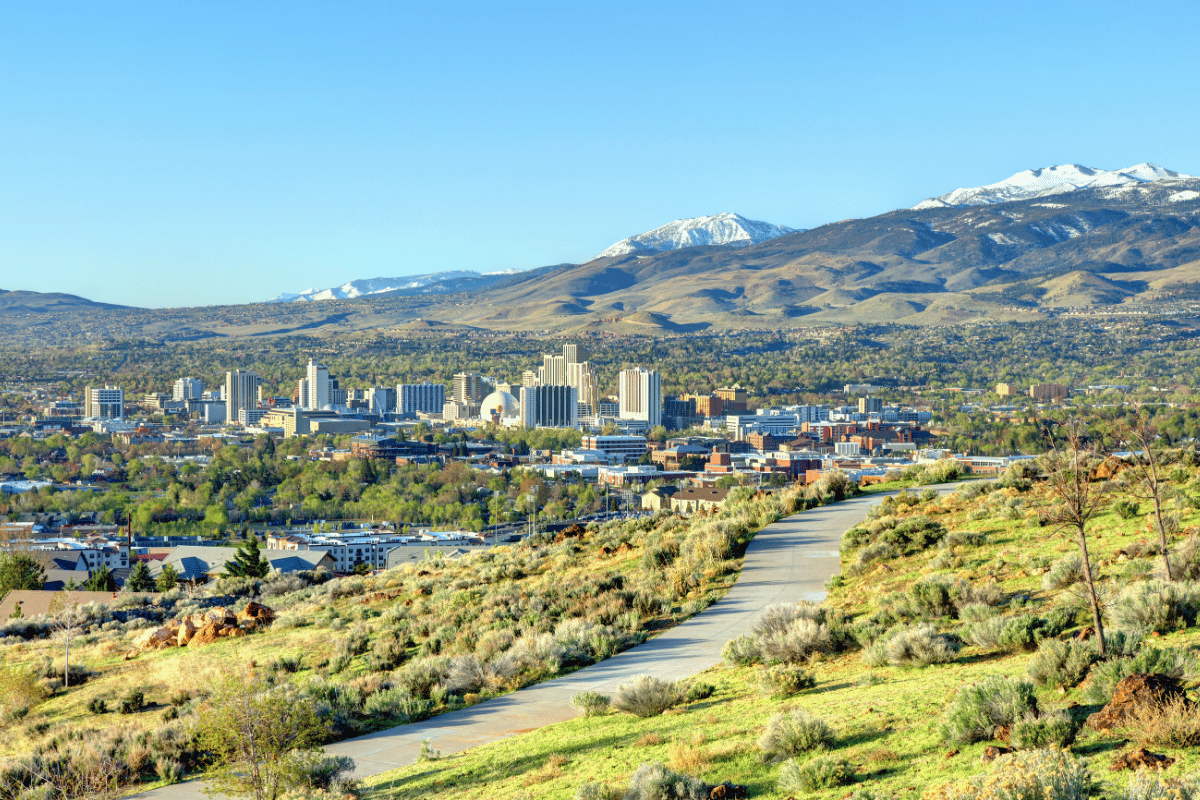
Reno-Sparks has evolved from its gaming and tourism roots into a diversified metropolitan area attracting technology companies, outdoor enthusiasts, and California transplants seeking lower costs without sacrificing quality of life. With approximately 500,000 residents, the metro area combines urban amenities with mountain town proximity, all under Nevada’s favorable tax structure.
Whether considering Reno as a primary residence, second home base, or investment market, understanding the community’s character, economic fundamentals, and market dynamics is essential for informed decision-making.
Community Character & Lifestyle
Urban Amenities with Outdoor Access
Reno’s defining characteristic is its unique combination of city services with immediate access to outdoor recreation. Downtown Reno sits at 4,500 feet elevation with the Sierra Nevada rising immediately to the west. Within 30 minutes, residents can access hiking, mountain biking, and skiing. Lake Tahoe is 45 minutes away.
The metro area offers cultural venues including museums, theaters, art galleries, and a thriving restaurant scene—particularly in Midtown’s arts district. The University of Nevada, Reno brings educational and cultural programming. Major events include Hot August Nights (classic car), Burning Man preparation culture, and outdoor festivals.
Climate & Seasons
Reno experiences four distinct seasons with 300+ days of sunshine annually. Summers are warm and dry (highs in the 90s) with cool evenings. Winters are mild compared to true mountain climates (average highs in the 40s-50s) with occasional snow in the valley and reliable snowpack in nearby mountains for skiing.
Low humidity year-round creates comfortable conditions even during summer heat. The high desert climate means significant temperature swings between day and night.
Community Demographics
The metro area skews slightly younger than national averages, with median age around 37. Educational attainment is above national average, reflecting the presence of UNR and influx of technology workers. Median household income approximately $75,000, though varies significantly by neighborhood.
Population growth has been strong, particularly from California (seeking lower costs and no state income tax) and remote workers untethered from expensive coastal cities.
Neighborhoods & Residential Areas
Midtown Reno
Walkable arts district with restaurants, breweries, galleries, and cultural venues. Historic homes (1920s-1940s) alongside newer infill. Popular with young professionals, creatives, and those seeking urban lifestyle. Higher density, limited parking, vibrant street life.
Price Range: $450,000-$900,000 depending on property size and condition
Old Southwest
Established neighborhood with tree-lined streets, historic homes, and proximity to downtown. Character properties from early 1900s with mature landscaping. Strong sense of community. Mix of long-time residents and younger buyers appreciating historic character.
Price Range: $500,000-$1,200,000
South Reno
Family-oriented suburban area with newer homes, good schools, shopping centers, and trail access. Largest concentration of recent construction. Master-planned communities, parks, and suburban amenities. Most popular area for families with children.
Price Range: $550,000-$1,500,000+ depending on community and property size
Northwest Reno
Growing suburban area with mountain views and family focus. Newer development with continued growth. Access to trails and outdoor recreation. More affordable than South Reno while offering similar suburban lifestyle.
Price Range: $500,000-$1,000,000
Somersett
Upscale master-planned community with golf course, clubhouse, trails, and views. Luxury homes on larger lots. Strong HOA maintaining roads, landscaping, and amenities. Appeals to affluent buyers seeking amenity-rich lifestyle.
Price Range: $700,000-$2,500,000+
Sparks
Adjacent city offering more affordable housing while maintaining access to Reno amenities. Own downtown area (Victorian Square) with community character. Mix of established neighborhoods and newer development. Strong value proposition for budget-conscious buyers.
Price Range: $400,000-$700,000
Economic Fundamentals
Economic Diversification
Reno’s economy has diversified significantly beyond gaming and tourism. Major sectors now include:
Technology: Tesla Gigafactory employs thousands and has attracted supplier ecosystem. Google, Apple, Switch (data centers), and Panasonic have major operations. Technology sector continues growing.
Logistics & Distribution: Central western U.S. location makes Reno attractive for distribution centers. Amazon, Walmart, Chewy, Home Depot, and others operate major facilities. Continued industrial development in North Valleys and I-80 corridor.
Advanced Manufacturing: Battery production, electric vehicles, and aerospace components. Manufacturing employment has grown significantly.
Professional Services: Corporate relocations from California have brought professional service firms. No state income tax and business-friendly regulations attract companies.
Employment Growth
Employment has grown faster than state and national averages over the past decade. Unemployment consistently below national average. Wage growth, particularly in technology and logistics sectors, supports housing demand and rental rate appreciation.
Population Growth
Reno-Tahoe metro area population has grown approximately 12% from 2010-2020, with continued growth projected. In-migration primarily from California, driven by:
- No state income tax (vs. 13.3% top rate in California)
- Lower housing costs (median home ~40% less than Bay Area, Sacramento)
- Remote work flexibility allowing geographic arbitrage
- Quality of life and outdoor recreation access
- Business-friendly regulatory environment
Real Estate Market Fundamentals
Supply and Demand Dynamics
Reno-Sparks faces geographic constraints limiting supply—surrounded by mountains on three sides with BLM land restrictions. While new construction occurs, it hasn’t kept pace with population and employment growth. Inventory remains below historical averages, supporting prices.
Demand drivers include:
- Employment growth creating new buyer households
- California migration (cash buyers, higher budgets)
- Investor demand (local and out-of-state)
- Remote workers seeking lower costs with lifestyle quality
Pricing Trends
Median home prices have appreciated significantly from post-recession lows. From 2012 to 2025, prices increased approximately 120-140% depending on neighborhood. Current median around $575,000.
Appreciation has moderated from 2020-2021 peak pace but remains positive. Market has normalized from pandemic extremes into more balanced conditions with steady, sustainable growth.
Rental Market
Strong rental demand across all property types. Multi-family vacancy rates consistently below 5%, indicating healthy landlord-favorable conditions. Rent growth has outpaced national averages, driven by:
- Employment and population growth
- Home affordability challenges keeping renters in market longer
- California migrants accustomed to higher rents
- Limited new multi-family supply
Average single-family rental: $2,200-$2,800/month depending on size/location
Average multi-family rental: $1,400-$1,800/month for 2-bedroom units
Investment Market Overview
Investment Property Types
Single-Family Rentals: Consistent demand from families and professionals. Lower management complexity than multi-family. Target cash-on-cash returns 5-7% for stabilized properties.
Small Multi-Family (2-4 units): Owner-occupied opportunities with rental income. Strong demand, limited supply. Returns similar to single-family but with diversified income.
Multi-Family (5+ units): Professional investment product with economies of scale. Cap rates 5.5-6.5% for stabilized properties. Value-add opportunities exist in older properties with below-market rents.
Commercial Properties: Office, retail, and industrial opportunities. Industrial/warehouse particularly strong given logistics growth. Cap rates vary by property type and quality (5.5-8.5%).
Why Investors Choose Reno
Tax Advantages: No state income tax on rental income. No state capital gains tax on property sales. Property taxes around 0.60% effective rate—below national average and capped at 3% annual increases.
Landlord-Friendly Laws: Nevada’s eviction process among fastest in nation (3-4 weeks for non-payment vs. 6+ months in California). Reasonable security deposit limits. No rent control. Clear lease termination procedures.
Cash Flow Potential: Reasonable acquisition costs relative to rents create viable cash flow. Rent-to-price ratios support positive returns with typical financing.
Market Fundamentals: Employment and population growth support demand. Limited supply constrains inventory. Continued economic diversification reduces concentration risk.
Appreciation Potential: While past appreciation doesn’t guarantee future performance, fundamental drivers (growth, supply constraints, migration) support continued value growth over long-term holding periods.
Investment Considerations
Market Maturity: Reno is no longer an “undiscovered” market. Prices have appreciated significantly from post-recession lows. Current entry points require focus on cash flow sustainability rather than aggressive appreciation assumptions.
Property Management: Out-of-state investors need quality property management. Professional management widely available at 8-10% of collected rent for residential properties.
Market Cycles: Real estate markets are cyclical. Nevada experienced significant volatility during 2008 financial crisis. Current fundamentals are stronger, but investors should plan for market cycles.
Competition: Institutional investors, local investors, and California buyers create competitive acquisition environment. Off-market relationships and speed of execution provide advantages.
Quality of Life Factors
Education
Washoe County School District serves Reno-Sparks. School quality varies significantly by location—South Reno and Northwest Reno areas generally have higher-rated schools. Magnet and charter school options available. University of Nevada, Reno provides higher education.
Healthcare
Renown Regional Medical Center is the primary hospital system. Saint Mary’s Regional Medical Center provides additional services. Healthcare availability adequate for metro population but specialists may require travel to larger markets for complex conditions.
Transportation
Reno-Tahoe International Airport offers direct flights to major western and some eastern U.S. cities. I-80 corridor provides east-west connectivity. Public transportation (RTC buses) available but most residents rely on personal vehicles. Traffic generally manageable compared to major metros, though peak hours see congestion on main corridors.
Cost of Living
Overall cost of living approximately 10-15% below California metros, driven primarily by housing and tax savings. No state income tax saves high earners significant annual costs. Sales tax around 8.3%. Utility costs moderate. Food and consumer goods slightly above national average but below California.
Challenges and Considerations
Water Resources
Long-term water availability faces challenges from drought and competing demands. Current supplies adequate, but conservation measures in place. This remains a consideration for multi-decade planning.
Air Quality
Summer can bring smoke from wildfires (California and Oregon). Winter sees occasional inversions trapping cold air and emissions. Generally good air quality most of year but seasonal concerns exist.
Growth Management
Rapid growth creates infrastructure challenges—traffic, school capacity, service provision. City and county working to manage growth sustainably but growing pains evident.
Economic Exposure
While diversified, economy retains exposure to tourism/gaming and is increasingly concentrated in technology/logistics. Economic downturns in these sectors could impact local economy and real estate demand.
Conclusion
Reno-Sparks offers compelling value proposition for residents and investors—combining urban amenities, outdoor recreation access, favorable tax structure, and strong economic fundamentals. The metro area has matured from gaming-dependent economy into diversified market attracting technology companies, remote workers, and California migrants.
For residents, Reno provides quality of life with lower costs than comparable western cities. For investors, combination of cash flow potential, landlord-friendly regulations, tax advantages, and growth fundamentals create attractive risk-adjusted returns.
Success in Reno market—whether as resident or investor—requires understanding neighborhood dynamics, economic drivers, and realistic expectations about costs, growth, and market cycles. Those who combine local market knowledge with disciplined analysis find Reno rewards both lifestyle and financial objectives.
Next Steps
For those considering Reno:
- Schedule a consultation to discuss your objectives and neighborhood preferences
- Review current market data and neighborhood guides
- Tour properties and neighborhoods in person to experience the community
- Connect with local resources (schools, employers, community organizations)
Disclaimer: This guide is for informational purposes only and does not constitute investment, tax, or legal advice. Consult qualified professionals before making real estate decisions.