North Lake Tahoe, particularly Incline Village and Crystal Bay on Nevada’s north shore, represents one of the most distinctive real estate markets in the western United States. Combining world-class alpine setting, luxury residential amenities, strong vacation rental economics, and Nevada’s favorable tax structure, the area attracts affluent second-home buyers, vacation rental investors, and those seeking permanent residence in a resort community.
With Lake Tahoe’s crystal-clear waters, year-round outdoor recreation, limited development capacity, and high-income demographics, North Lake Tahoe offers unique lifestyle and investment characteristics fundamentally different from traditional residential markets.
Community Character & Setting
Alpine Resort Lifestyle
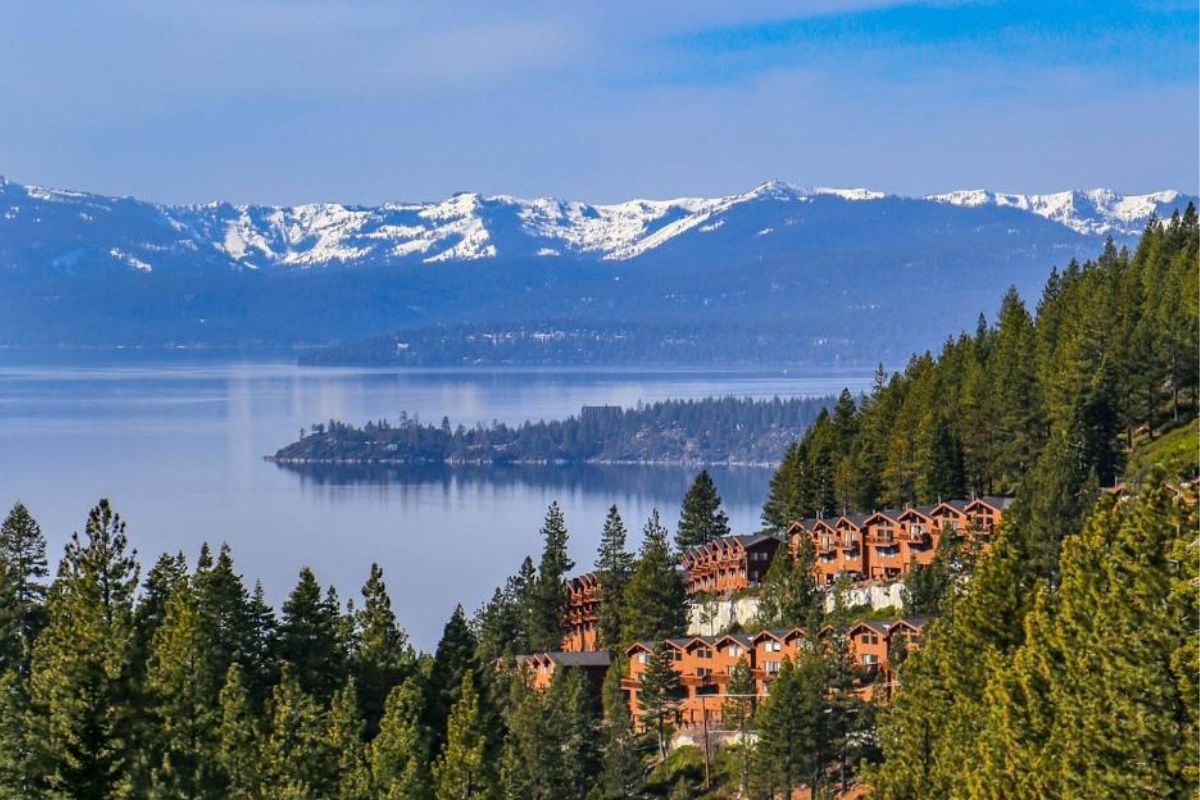
North Lake Tahoe sits at approximately 6,200 feet elevation on the Nevada side of Lake Tahoe’s north shore. Incline Village and Crystal Bay form the primary Nevada communities, offering direct lake access, mountain recreation, and resort amenities within a compact alpine setting.
The lifestyle centers on outdoor recreation—skiing at Diamond Peak and nearby world-class resorts, lake activities (boating, paddle boarding, swimming), mountain biking, hiking, and golf. Incline Village General Improvement District (IVGID) provides extensive amenities including private beaches, recreation center, golf courses, and ski resort to property owners paying into the district.
Community character blends vacation resort atmosphere with year-round residential stability. While population swells during peak seasons (winter holidays, summer), a core group of approximately 8,000 year-round residents maintains community continuity.
Climate & Seasons
North Lake Tahoe experiences true alpine climate with four distinct seasons. Winters bring significant snowfall (average 300+ inches annually) creating world-class skiing conditions. Summers are warm and dry with daytime highs in the 70s-80s and cool evenings—perfect for outdoor activities without oppressive heat.
Spring and fall offer shoulder seasons with fewer crowds, beautiful weather, and access to recreation. The lake’s microclimates moderate temperatures compared to surrounding mountains—generally milder winters near the lake and cooler summers than the valleys.
Geographic Constraints & Development
Lake Tahoe faces extreme development constraints. The Tahoe Regional Planning Agency (TRPA) strictly regulates development to protect lake clarity and environment. Nearly all developable land has been built out. New construction is minimal, consisting primarily of teardowns and rebuilds on existing lots.
These constraints create long-term scarcity value—supply is effectively fixed while demand continues from affluent buyers seeking luxury resort properties.
Primary Communities
Incline Village
Incline Village represents the premium Nevada lakeside community. Established in the 1960s with master-planned development, the area features luxury estates, golf course properties, lakefront homes, and upscale condominiums.
Key Features:
- Private beaches (5) accessible to IVGID members
- Championship golf courses (2): Incline Championship Course and Mountain Course
- Diamond Peak Ski Resort (community-owned)
- Recreation center with fitness, tennis, pickleball
- Boat launch facilities
- Well-maintained roads and infrastructure
Demographics: Affluent, educated, many business owners or executives. Mix of retirees, remote workers, and vacation home owners. Median household income significantly above national average.
Price Range: $1,000,000 to $10,000,000+ depending on location, size, lake access, and views. Lakefront properties command significant premiums.
Crystal Bay
Adjacent to Incline Village on the north shore, Crystal Bay offers more accessible price points while maintaining alpine lifestyle and lake proximity. Smaller community with mix of year-round residents and vacation properties. Some properties have access to IVGID amenities.
Character: Historic casino buildings, more varied property types, slightly less polished than Incline but authentic mountain community feel. Strong sense of community among year-round residents.
Price Range: $800,000 to $3,000,000+ depending on property type, condition, and amenities.
Economic & Demographic Context
Affluent Demographics
North Lake Tahoe attracts high-income residents and property owners. Many are business owners, executives, successful professionals, or retirees with significant assets. Educational attainment high, with many holding advanced degrees.
Property owners often maintain primary residences elsewhere (Bay Area, Southern California, other western states) using Tahoe properties as second homes or vacation rentals when not in personal use.
Tourism Economy
The local economy centers on tourism and recreation. Major sectors include:
- Lodging and accommodations (hotels, vacation rentals)
- Restaurants and hospitality
- Ski resorts and recreation services
- Retail (both year-round and seasonal)
- Real estate and property management
- Professional services supporting property owners
Seasonal employment patterns create fluctuations—peak staffing during winter and summer, slower during shoulder seasons. This creates both opportunities and challenges for year-round residents and service businesses.
Nevada Tax Advantages
North Lake Tahoe’s Nevada location provides significant tax advantages over California side of the lake:
- No state income tax (vs. 13.3% top rate in California)
- No state capital gains tax on property sales
- Lower property taxes than California properties
- Estate and inheritance tax benefits
For affluent second-home buyers and investors, these tax differences create meaningful financial advantages favoring Nevada side properties.
Real Estate Market Fundamentals
Supply Constraints
North Lake Tahoe faces the most severe supply constraints of any California or Nevada market. TRPA development restrictions, environmental protections, geographic boundaries (lake and mountains), and already-developed land mean virtually no new supply enters the market.
New construction consists almost entirely of teardowns and rebuilds—wealthy buyers acquiring older properties, demolishing, and building custom luxury homes. This improves overall housing stock quality but doesn’t increase unit count.
This supply constraint creates long-term scarcity value. As wealth continues accumulating in coastal markets and demand for resort properties remains strong, limited Tahoe inventory supports sustained pricing power.
Pricing Trends
North Lake Tahoe property values have appreciated significantly over decades, with acceleration during pandemic as remote work and desire for space/lifestyle drove demand. Current median prices around $1,250,000, though significant variation by property type and location.
Lakefront properties command substantial premiums—often $3,000,000 to $10,000,000+ depending on size, views, and beach access. Premium ski-in/ski-out properties near resorts also command high values.
Market has moderated from 2020-2021 peak pace but remains strong. Wealthy buyers continue seeking luxury mountain properties despite higher interest rates, as many purchase with significant cash down payments or all-cash.
Transaction Volume & Liquidity
North Lake Tahoe is a smaller, less liquid market than urban areas. Fewer transactions annually mean properties can take longer to sell, particularly at higher price points. However, well-positioned properties with realistic pricing still transact efficiently.
Luxury market (properties above $3,000,000) sees the most volatility in absorption time—can move quickly during hot markets but slow during economic uncertainty when discretionary luxury purchases decline.
Vacation Rental Investment Market
Vacation Rental Fundamentals
North Lake Tahoe’s vacation rental market represents one of the strongest in the United States, driven by:
- Year-round demand (winter skiing, summer lake activities)
- Affluent visitor demographics willing to pay premium rates
- Limited hotel inventory creating strong short-term rental demand
- Corporate retreats and group gatherings
- Proximity to Bay Area and other California markets
Well-positioned, properly managed vacation rentals generate strong revenue, though with higher operating costs than traditional rentals.
Vacation Home Rental (VHR) Permits
Critical consideration: Vacation rentals require VHR permits, which vary significantly by jurisdiction within North Lake Tahoe. Some areas have moratoriums on new permits. Some properties come with transferable permits. Others may never be eligible for short-term rentals.
Incline Village/Crystal Bay VHR Regulations: Washoe County regulates VHR permits. Limited number of permits available. Properties with existing permits command premiums. Investors must verify permit status and transferability before acquisition if vacation rental income is part of investment thesis.
Properties without VHR permits can still be used as personal second homes or long-term rentals, but not short-term vacation rentals—significantly impacting investment returns for buyer expecting vacation rental income.
Vacation Rental Economics
Typical Revenue: Well-positioned properties with good management can generate $75,000 to $200,000+ annually depending on size, location, amenities, and permit type. Lakefront and ski-in/ski-out properties command highest rates.
Peak Seasons:
- Winter: Christmas/New Year’s, MLK weekend, Presidents’ Day week, spring break
- Summer: Memorial Day through Labor Day
- Shoulder seasons: Lower occupancy but still generate revenue
Operating Costs:
- Property management: 25-40% of revenue
- Cleaning: $200-400 per turnover
- TOT (transient occupancy tax): 10-13% depending on jurisdiction
- Utilities: $500-1,000+/month year-round
- HOA fees: $200-1,000+/month depending on property
- Property taxes: 0.60-0.80% of assessed value
- Insurance: Higher than primary residence
- Maintenance and repairs: Higher due to guest turnover
- Linens, supplies, amenities
Net Returns: Well-managed vacation rentals typically generate 4-8% net yields after all operating expenses. However, yields vary dramatically based on property positioning, management quality, and personal use (which reduces rental revenue).
Property Management Requirements
Vacation rental properties require professional management—guest communication, booking management, cleaning coordination, maintenance, 24/7 support. Self-management from distance is impractical.
Professional management costs 25-40% of revenue but provides essential services ensuring property is maintained, guests satisfied, and issues resolved quickly. Quality management directly impacts occupancy rates and reviews.
Investment Strategies
Primary Investment Approaches
Vacation Rental with Personal Use: Most common approach. Owner uses property for personal vacations (30-60 days annually) and rents remainder of year. Vacation rental income offsets ownership costs while maintaining personal access to luxury resort property.
Target Returns: 4-8% net yield plus personal use value and long-term appreciation potential.
Pure Investment Vacation Rental: Investors who don’t plan significant personal use can maximize rental income by keeping property available year-round. Higher revenue but requires complete hands-off ownership.
Target Returns: 6-10% net yields for optimally positioned properties with professional management.
Long-Term Appreciation Play: Some investors accept minimal or negative cash flow, banking on long-term appreciation driven by scarcity and continued wealthy buyer demand. May rent property long-term to cover some expenses or leave vacant for occasional use.
Long-Term Rental: Properties without VHR permits can be rented on annual leases. Demand exists from seasonal workers, year-round residents, and remote workers seeking Tahoe lifestyle. Lower revenue than vacation rentals but also lower management complexity.
Investment Considerations
High Entry Costs: North Lake Tahoe requires significant capital—median property $1,250,000+ means substantial down payment even with financing. All-cash purchases common in luxury segments.
Carrying Costs: Even with rental income, properties often have negative or minimal cash flow due to high acquisition costs, property taxes, HOA fees, utilities, and maintenance. Investors must be prepared to cover expenses beyond rental income.
Seasonal Revenue Concentration: Revenue heavily concentrated in peak seasons. Vacancy during shoulder seasons normal. Cash flow modeling must account for seasonal patterns.
Regulatory Risk: VHR regulations can change. Some jurisdictions have considered stricter limits or bans. Regulatory changes could impact investment returns.
Market Cyclicality: Luxury resort properties show higher volatility than primary residence markets. Economic downturns impact discretionary vacation spending and luxury real estate demand.
Competition: Well-managed properties compete with hotels and other vacation rentals. Quality, amenities, location, and pricing must be competitive to maintain occupancy.
Lifestyle Investment vs. Pure Financial Investment
Critical distinction: Most North Lake Tahoe investments are lifestyle investments as much as financial investments. Buyers value personal use, building family memories, having resort property access, and long-term appreciation—not just cash-on-cash returns.
Pure financial investors focused solely on maximizing returns often find better risk-adjusted returns in traditional rental markets like Reno. North Lake Tahoe’s appeal is the combination of lifestyle enjoyment and financial returns, with appreciation potential driven by scarcity.
Successful North Lake Tahoe investors typically:
- Value personal use and lifestyle benefits
- Have capital to cover potential negative cash flow
- Take long-term view (10+ years) on appreciation
- Accept higher volatility for lifestyle and appreciation upside
- Work with experienced local advisors understanding market nuances
Quality of Life Factors
Recreation & Amenities
World-class outdoor recreation defines North Lake Tahoe lifestyle. Winter skiing at Diamond Peak, Palisades Tahoe, Northstar, and other resorts. Summer lake activities—boating, swimming, paddle boarding, kayaking. Year-round hiking, mountain biking, and trail access. Golf at championship courses in Incline Village.
Dining & Entertainment
Restaurant scene has improved significantly, with upscale dining, casual eateries, and various cuisines available. Entertainment options include casinos on California side, live music, festivals, and community events. Not as extensive as major cities but adequate for resort community.
Schools
Incline Village has its own elementary and middle schools (part of Washoe County School District). High school students attend North Tahoe High School (California). Schools serve permanent resident families and are well-regarded, though enrollment smaller than urban districts.
Healthcare
Tahoe Forest Hospital (Truckee, California) and Incline Village Community Hospital provide local care. For specialized medical needs, Reno (45 minutes) offers more comprehensive services.
Accessibility
Reno-Tahoe International Airport approximately 45 minutes from Incline Village. Direct flights to major western cities. During heavy snow, mountain passes can close temporarily, requiring flexibility for travel plans. Most residents maintain all-wheel or four-wheel drive vehicles for winter conditions.
Challenges & Considerations
Climate & Maintenance
Heavy snowfall requires snow removal, roof maintenance, and winterization considerations. Properties left vacant during winter need proper heating and monitoring to prevent frozen pipes and damage. Maintenance costs higher than moderate climates.
Wildfire Risk
Forest setting creates wildfire risk, particularly during dry summers. Insurance costs reflect this risk. Defensible space requirements exist. Some years see evacuation orders or air quality issues from regional fires.
Tourism Impact
While tourism drives economy and vacation rental demand, it also creates traffic, crowding during peak times, and wear on infrastructure. Year-round residents experience both benefits and challenges of living in active resort area.
Limited Services
Small community means fewer services than urban areas—limited shopping, healthcare specialists require travel to Reno, professional services may be limited. Tradeoff for resort lifestyle and natural beauty.
Cost of Living
Overall cost of living high. Groceries, dining, services all carry premium pricing typical of resort communities. Utilities expensive due to climate. Insurance costs higher. Budgeting must account for resort area pricing.
Conclusion
North Lake Tahoe, particularly Incline Village and Crystal Bay, represents unique investment and lifestyle opportunity combining alpine luxury, year-round recreation, supply scarcity, and Nevada tax advantages. The market serves primarily affluent buyers seeking second homes, vacation rental income, or permanent residence in world-class resort setting.
Investment success requires realistic expectations. This is not a cash-flowing rental market like Reno—it’s a lifestyle investment with potential for strong long-term appreciation driven by scarcity, continued wealthy buyer demand, and limited alternative luxury alpine locations.
Buyers who value personal use, can sustain ownership costs, take long-term view, and work with experienced local advisors find North Lake Tahoe rewards with both lifestyle enjoyment and financial returns. Those seeking pure cash flow returns may find better opportunities in traditional rental markets.
The key is matching investment approach to objectives—understanding that North Lake Tahoe offers something few markets can: combination of natural beauty, luxury amenities, tax advantages, and long-term scarcity value in one of North America’s most sought-after resort destinations.
Next Steps
For those considering North Lake Tahoe:
- Schedule a consultation to discuss your objectives, budget, and property preferences
- Understand VHR permit regulations and availability for vacation rental strategy
- Review current listings and market data for realistic pricing expectations
- Visit properties in person during both peak and off-peak seasons
- Connect with property management companies to understand vacation rental operations
- Develop comprehensive financial model including all ownership costs
Disclaimer: This guide is for informational purposes only and does not constitute investment, tax, or legal advice. Consult qualified professionals before making real estate decisions.